 Philippe Genois
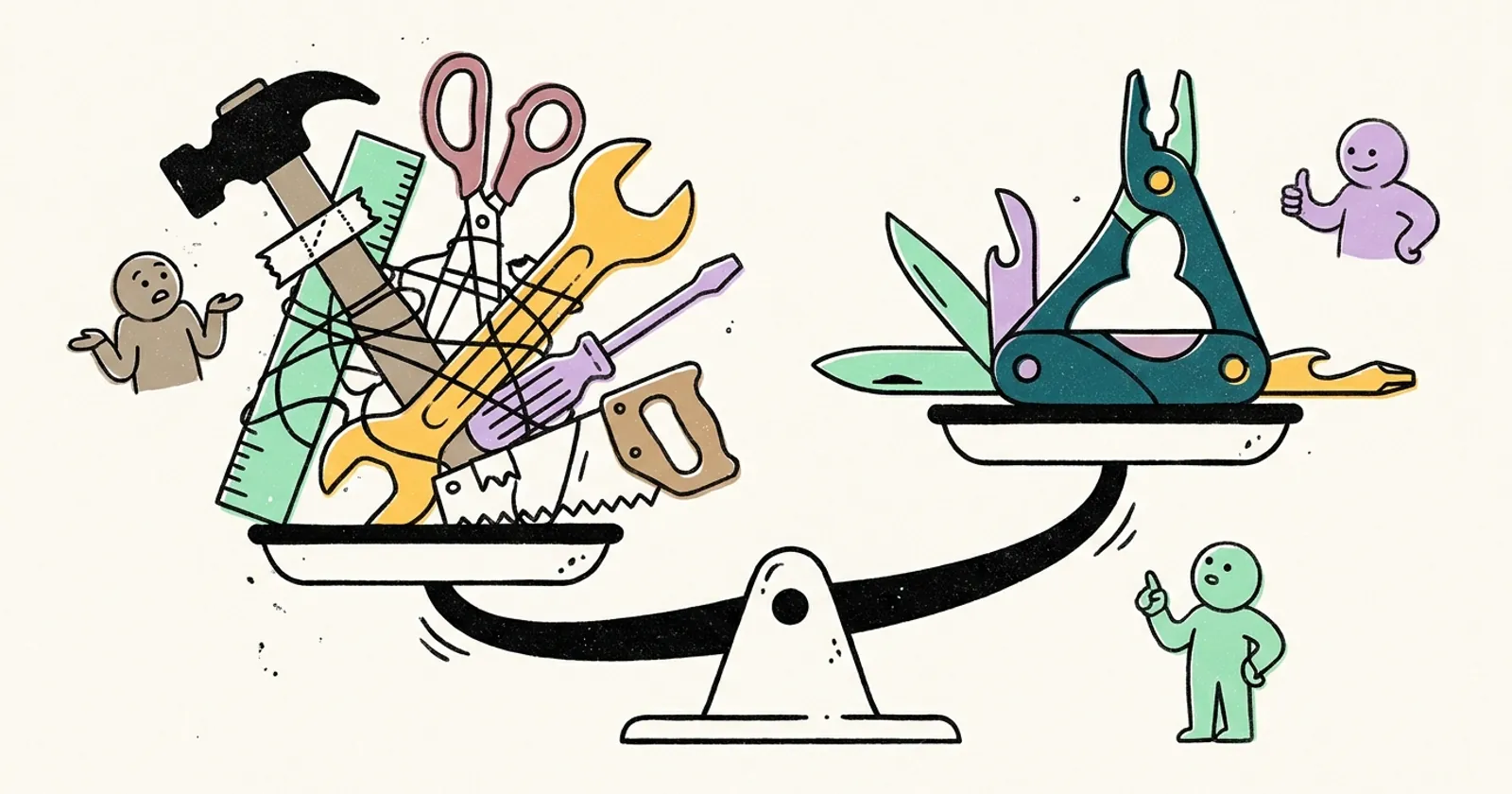
For a 10 to 100 person company in 2026, an all-in-one app usually beats a best-of-breed stack for the daily work of selling to, supporting and billing customers. AI made it cheap to shape one app around one company, while the glue, seats and split data of a stack of separate tools kept getting more expensive. Best-of-breed still wins for specialist jobs with heavy rules, like accounting and payroll, so most companies end up with one app for the core and a few specialists at the edges.
I ran InputKit on a best-of-breed stack for years and liked most of those tools. Here is how I think about the choice now.
What do "all-in-one" and "best-of-breed" mean?
Best-of-breed means you pick the strongest tool for each job and connect them: HubSpot for the CRM, Intercom for support chat, Aircall for phones, Fathom for meeting notes, Slack for team chat, Mailchimp for campaigns, with Zapier moving data between them.
All-in-one means one app covers those jobs with one login, one database and one record per customer. The customer's calls, emails, chats, deals and invoices sit on the same page because they were never in separate products.
Most companies are somewhere in between, so the choice is which side your daily customer work sits on.
Why did best-of-breed win the 2010s?
Each specialist tool really was better at its job than the suite that tried to do everything. The all-in-one suites of that era came from one vendor trying to cover ten categories with one engineering team, so their phone module lost to a phone company's product and their help desk lost to a help desk company's.
Integrations were also cheap to promise. Every tool shipped an API and a Zapier app, so "it connects to everything" sounded like a solved problem. You could buy the best CRM and the best support tool and tell yourself the data would flow.
And per-seat prices looked small one tool at a time. $30 a seat here, $50 a seat there. Nobody added them up on day one.
Is all-in-one software still mediocre?
The old suites earned that reputation. A suite built by one team and sold to everyone, with every module shaped for the average customer, tends to be fine at everything and great at nothing.
Two things are different now.
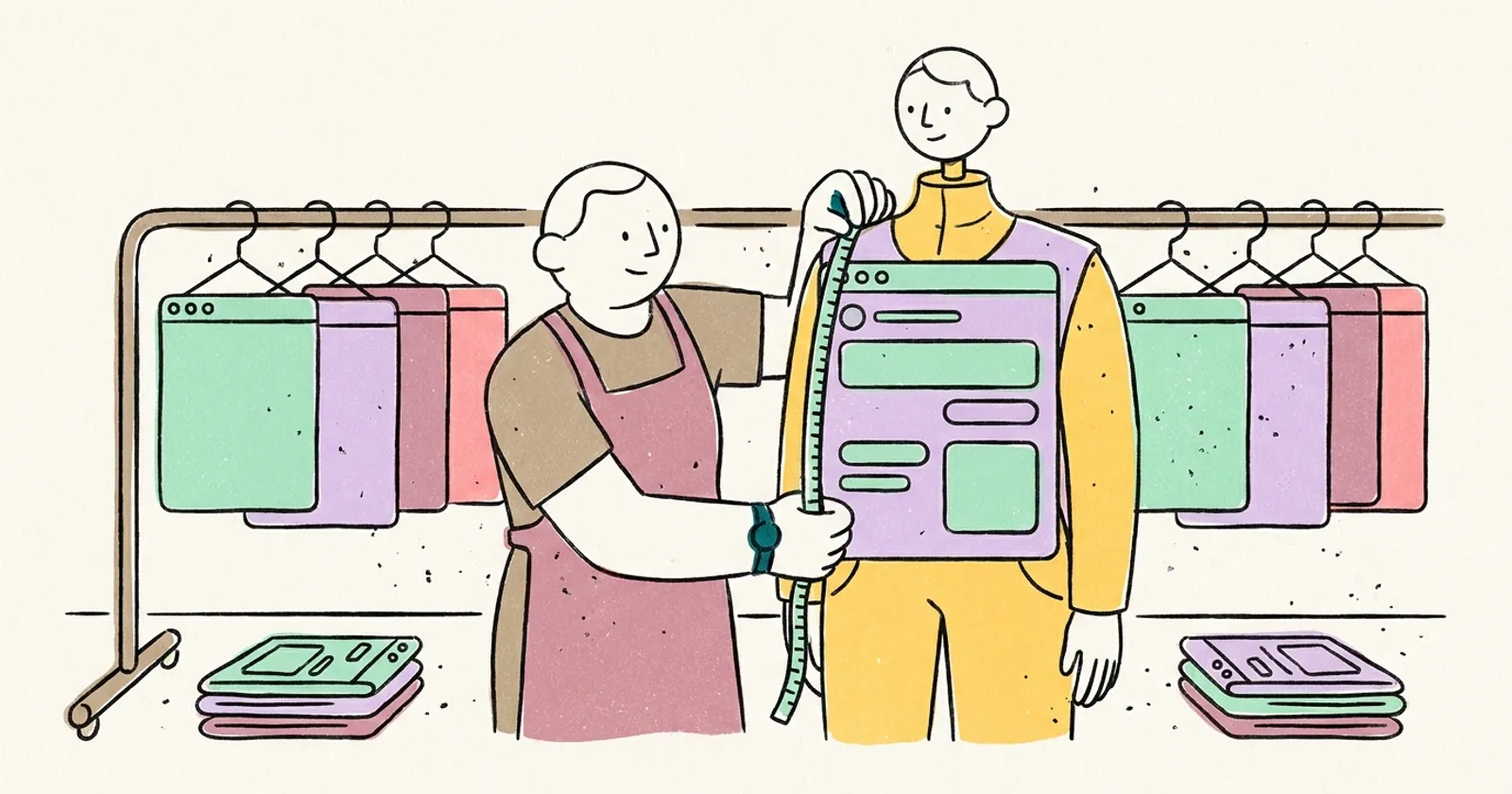
First, the old suites were mediocre because building and changing software cost so much. A vendor could only afford one version of each screen, so every customer got the average one. When AI makes building and changing software cheap, an all-in-one app can be set up around how one company works and changed by asking: the pipeline has your stages, the support inbox routes the way your team routes, and the fields are the ones you use.
Second, "best" is measured differently. A great CRM that doesn't know a customer called support yesterday is worse for your sales rep than a good CRM that does. Once the data lives in one place, every screen gets better, because every screen can show the whole customer.
All-in-one can still be mediocre. If a vendor bolts ten thin modules together and calls it a platform, you'll feel it. Judge each app on the jobs you do every day, with your own data in it.
What changed in 2026?
Building and changing software got cheap
Writing software used to be the expensive step. Now a working app can be set up around a business's description in minutes, and a change like "add a renewal date to each company and remind the account owner 60 days before" can be made in plain words and tried in a preview before anyone on the team sees it. A suite no longer has to be generic to be affordable.
Glue and seats compounded
Every pair of tools that needs to share data needs a connection, and every connection breaks on its own schedule. Ten tools can need dozens of Zaps, each with an owner, a login and a failure mode. Usually one person knows how it all works, and when they leave, nobody does. We cover this in why Zapier setups break.
Seats compound the same way. Here is an example you can redo with your own numbers: a 25-person company with 6 tools that each charge per seat, at an average of $40 a seat a month, pays 25 × 6 × $40 = $6,000 a month before any add-ons. Hire five people and it goes up by $1,200 a month, even if none of them needs half those tools. More on that in per-seat pricing.
Split data makes AI bots useless
An AI bot that answers a customer's "why was I charged twice?" needs the chat, the invoice, the subscription and the last call notes. In a best-of-breed stack those live in four products, so the bot needs four integrations, four sets of permissions and a way to match the same person across all of them. Most stacks never get there, so the bot answers from the help center and hands off.
When everything is in one app, the bot reads one record. That's why AI bots for admin work are much easier to run well on an all-in-one app than across a stack.
All-in-one vs best-of-breed: how do they compare?
| Best-of-breed stack | All-in-one app | |
|---|---|---|
| Logins | One per tool | One |
| Customer record | Split across tools, matched by email or by hand | One record with calls, emails, chats, deals and invoices |
| Fit to your process | Each tool fits its category's average | Set up around how your company works, changed by asking |
| Depth in one category | Deepest, built by a team focused on it | Good to deep, depends on the vendor |
| Connections | Zapier or custom code, maintained by you | Built in, since the data is already together |
| Cost as you hire | Grows per seat, per tool | Depends on the vendor's pricing model |
| AI bots | Need an integration to each tool | Read the same data the team sees |
| Risk if one vendor fails | Lose one piece | Lose more at once, so data access matters |
Take that last row seriously. With more in one place, check how you get your data out before you commit. With Alori, the data API reads every record.
When does best-of-breed still win?
Keep the specialist when the job has deep rules, outside obligations or a small, expert team that lives in it all day:
- Accounting. Ledgers, tax and closing the books are their own discipline. Keep QuickBooks or your accountant's tool. Alori syncs customers and invoices with QuickBooks and leaves the books there.
- Payroll. Withholding, filings and benefits change by state and country. Use a payroll provider.
- Deep specialist work: a data team's warehouse, an engineering team's code tools, a design team's design tools. The experts who use them need every feature their category offers.
- A tool everyone loves and nobody has to glue. If a tool fits, connects to nothing and costs little, leave it alone.
Best-of-breed wins where the work is deep and self-contained. All-in-one wins where the whole team shares the work and touches the same customers.
How do you decide for your company?
- List the jobs, not the tools: CRM, phones, support chat, email, campaigns, meetings and notes, scheduling, quotes, invoices, team chat. Our software stack audit gives you a table to fill.
- Mark which jobs touch the same customer. Sales, support, calls, meetings and billing almost always do, and those are the candidates for one app.
- Mark which jobs are specialist. Accounting, payroll and anything with outside filings usually stay separate.
- Count the glue. Every Zap or script that moves data between two tools in your shared group is a cost you stop paying when they become one app.
- Try the all-in-one with your own data. Import your real customers and deals, then use it for a week before you cancel anything. Before you cancel a subscription covers the safe way out.
Where Alori fits
Alori is the all-in-one app for the shared core. You describe your business and Alori sets up one app around how you work: CRM with customers, companies, deals and pipelines, phone calls and texting with call recording and summaries, your Gmail inbox, support chat on your website and a help center, email campaigns, video meetings with recording and AI notes, scheduling, quotes, invoices, tasks and team chat. You change it by asking in plain words, and you try each change in a preview first. Alori handles hosting, the database and sign-in.
Bots work in the same app: Sam runs automations for the team, Leo coaches sales reps, Nora answers support chats and emails, Iris keeps the help center current, and Zoe works on marketing and SEO.
The one customer story I can point to is my own company. InputKit, a 15-person software company with 2,000 customers, moved about a dozen tools, including HubSpot, Aircall and Intercom, into one Alori app. HubSpot contacts and deals came over with every email, call, note, task and file in about two hours, and the case study has the before and after numbers. Moving the shared work into one app can cut the software bill by up to 80%, depending on how many tools and seats it replaces.
Frequently asked questions
Is all-in-one software worse than specialist tools?
It used to be, because one vendor built one generic version of every module. When an all-in-one app can be set up around your company and changed by asking, the gap shrinks for daily customer work. Specialist tools still lead in deep fields like accounting and payroll.
Can I mix all-in-one and best-of-breed?
Yes, and most companies should. Put the work that touches the same customers in one app, and keep specialists for accounting, payroll and expert tools. Alori syncs with QuickBooks for that reason.
What is the biggest hidden cost of a best-of-breed stack?
The glue. Every connection between tools needs someone to build it, watch it and fix it, and the data still ends up split, which limits what AI bots can do.
How do I avoid lock-in with an all-in-one app?
Check how you get your data out before you start. Alori's data API reads every record, so your own software can copy what it needs at any time.
How much can an all-in-one app save?
It depends on how many tools and seats you replace. Companies that move their shared work into one app can cut the software bill by up to 80%. Run the true cost of your SaaS stack on your own numbers first.
Try it with your own data
The fastest way to settle the all-in-one question is to see your own customers in one app. Alori is free to start, with no credit card. Describe your business, or look at the pricing first.