 Philippe Genois
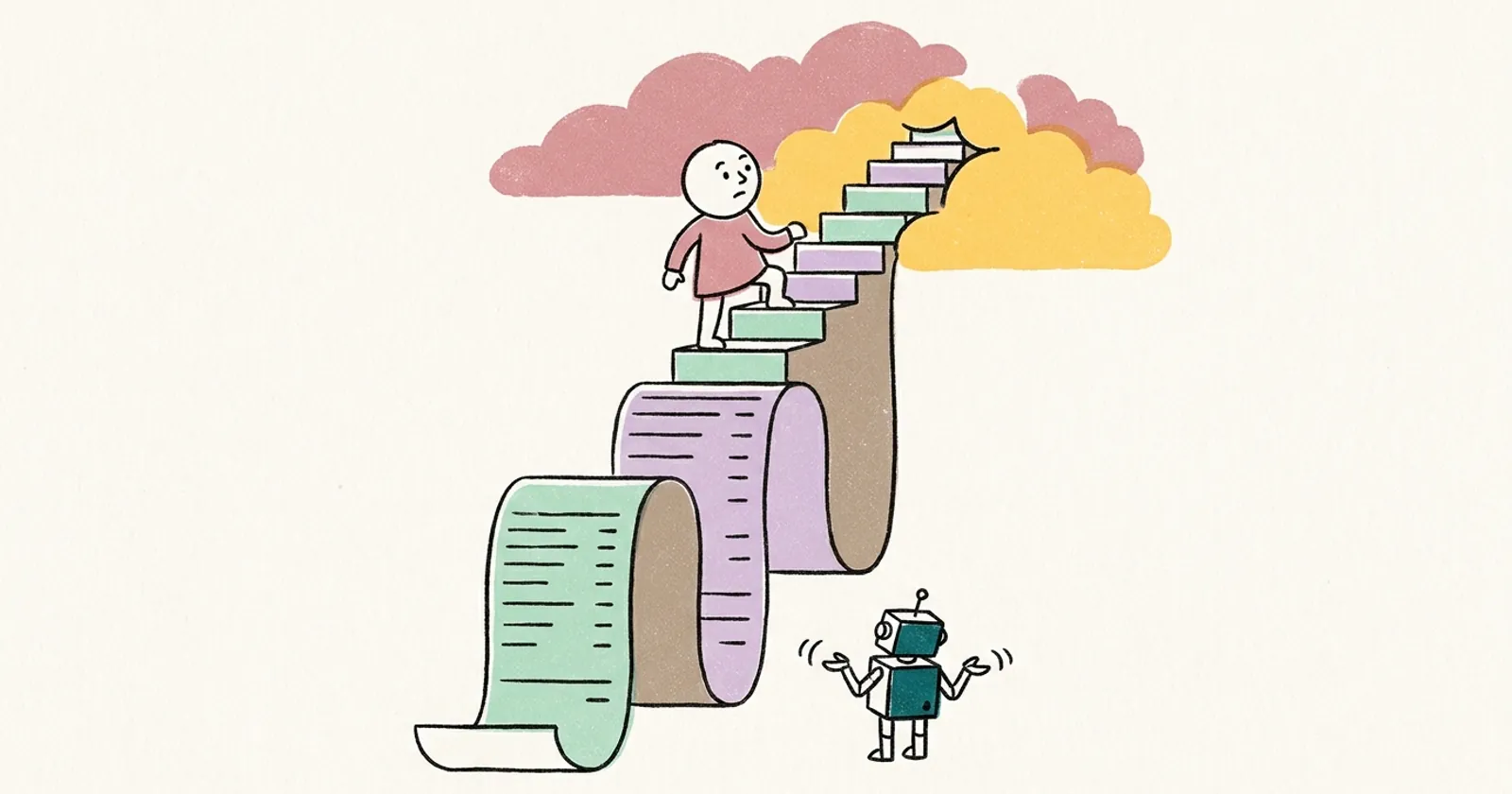
Your software bill keeps going up because most vendors price by the seat and, more and more, by the AI action, so the bill follows your headcount and your usage instead of what the software costs to make. AI has made building software far cheaper, but those savings stay with the vendor unless you change how you buy. For a 10 to 100 person company, the change is to stop renting a dozen tools priced per person and run on one app that fits how you work.
I ran InputKit for years on a stack like yours. Every renewal came in a little higher, every hire added a line to five invoices, and every new AI feature came with its own meter. Each increase looked reasonable on its own, and together the bill grew every quarter.
Why is SaaS so expensive when building software got cheaper?
Because SaaS prices were never set by what the software costs to build. They're set by what a customer will pay to keep using it, and the main lever is the number of people who need it.
Building software did get much cheaper. A screen, a report or an integration that took a team weeks a few years ago can now be written in hours with AI coding tools. The vendors use those tools too, so their cost to add a feature dropped. Your price for that feature didn't, because pricing follows value and switching costs. A CRM that holds five years of your deals is hard to leave, and the price reflects that.
Where do SaaS price increases come from?
Most increases don't arrive as a headline price change. They come from the way plans are built:
- Seats. Each hire adds a seat on every tool that person needs. Per-seat pricing walks through the math for a 30-person team.
- Tiers. The feature you need sits on the next plan up, and the higher price applies to every seat, including people who never use that feature.
- AI add-ons. AI features are often sold as a separate add-on, priced per seat on top of the base seat.
- Per-action AI fees. Some tools charge for each AI answer or each resolved conversation. Intercom, for example, charges $0.99 per resolution by its Fin AI agent. The bill now grows with your customers' questions as well as your team.
- Extras that used to be included. Call transcripts, recording storage, extra contacts in a marketing tool, more automation tasks. Each one is a small line that renews forever.
- Renewal uplifts. Annual contracts often renew at a higher price, and the notice window to negotiate is easy to miss.
Each line is defensible on its own, but you have ten or fifteen vendors doing the same thing at once.
How does a bill grow while the team barely changes?
Here's a worked example for a 25-person agency. The numbers are round examples, not any vendor's list price, so redo it with your own invoices.
| What changed this year | Monthly effect (example) |
|---|---|
| Hired 4 people, each needs CRM, phone, chat, meeting recorder | +$640 |
| Moved the CRM to a higher tier for one reporting feature | +$300 |
| Added an AI add-on to the CRM for the sales team | +$400 |
| Support chat AI answering about 600 chats a month at $0.99 | +$594 |
| Turned on call transcription in the phone system | +$150 |
| Two annual renewals came back 8% higher | +$120 |
| Total | +$2,204 a month |
That's about $26,000 more a year for a team that grew by four people. Nobody decided to spend $26,000 more on software; it came from six small approvals spread across six vendors. To see your whole bill, not only this year's increase, the true cost of your SaaS stack shows how to add it up.
Why does AI make the bill bigger instead of smaller?
Because most vendors bolt AI onto a pricing model built for humans. The human seat stays, and AI becomes a second meter.
That's backwards from what you'd expect. If a bot answers a support chat, you'd expect to need fewer support seats, and so a lower bill. In practice you often keep the same seats and add a per-answer fee. If the bot drafts follow-up emails, the CRM charges an AI add-on on each seat that uses it.
Each tool also has its own AI, which only knows its own data. The support bot doesn't know what the salesperson promised on a call. The meeting recorder doesn't know the deal's stage. So you pay for several AIs, each with part of the picture, and someone still copies between them.
Why did small companies rent software in the first place?
Because owning it used to be out of reach. A custom app that fit how your company worked meant hiring an agency or a development team, and a real CRM with phones, support and invoicing could easily cost six figures to build, plus someone to maintain it. For a company of 10 to 100 people, renting was the only sensible choice. You took the generic tool and bent your process around it.
Some founders tried the middle path in the last couple of years: rebuild one tool with an AI coding tool like Lovable or Replit. That makes the first version cheap. Then you own hosting, sign-in, the database, security, and every fix, and the tool needs someone to look after it. Renting software vs owning it covers that trade.
Today a full app shaped around one company no longer needs a custom build project. Alori sets one up from ready-made modules and hosts it for you.
How do you keep the savings from AI yourself?
Look at how each tool charges as well as what it costs. A few steps:
- List every recurring charge from the last three months of card statements and invoices. Note how each one charges: per seat, per contact, per action, flat.
- Mark the meters. Circle every line that grows with headcount or usage. Those are the lines that will be bigger next year.
- Find the overlap. Many stacks pay for the same job twice, like call recording in the phone tool and a separate meeting recorder. Paying for features you don't use shows how to find it.
- Write down renewal dates and notice windows. That's when you can negotiate or leave.
- Price the alternative: one app that covers the core work, with pricing that doesn't multiply by people.
| Pricing that keeps the savings with the vendor | Pricing that passes them to you |
|---|---|
| Per seat on every tool | Unlimited users |
| AI sold as a per-seat add-on | AI work billed by use, with the cost shown first |
| A fee per AI answer on top of seats | Bots that do the work instead of adding a meter to a seat |
| Each tool with its own AI and its own data | One app where every bot reads the same customer record |
| Features gated by tier | You add what you need when you need it |
How does Alori price it?
Alori sets up one all-in-one app around how your company works: the CRM with companies, contacts, deals and pipelines, quotes, invoices, scheduling and booking, team chat, built-in calls and texts with recording, transcripts and AI summaries, your Gmail inbox, website support chat and a help center, email campaigns, video meetings with recording and AI notes, tasks and a website. You change it by asking in plain words, and you try each change in a preview first.
Every plan includes unlimited users, with no fee per seat. You pay in credits for changes to your app and for calls, texts, video and AI work, and each bot's page shows its monthly cost before you turn it on. Companies that switch can cut their software bill by up to 80%, depending on what they pay today. The pricing page has the plans.
AI in Alori works on the whole record. Sam, the team's AI teammate, updates deals, pulls reports and follows up, and runs automations you describe in plain words. At InputKit, a 15-person software company, Leo briefs reps before each demo and drafts the follow-up when the call ends, and Nora answers almost every support chat and email from a help center that Iris keeps current. InputKit moved about a dozen tools, including HubSpot, Aircall and Intercom, into one Alori app. The InputKit case study has the details.
Frequently asked questions
Why do SaaS prices keep going up?
Most tools charge per seat, lock features behind higher tiers, and now add AI as a paid add-on or a per-action fee. Each line grows with your headcount or usage, and annual renewals often come back higher. Across ten or more tools, that adds up even when no single price changes much.
Did AI make software cheaper?
It made software cheaper to build. Vendors' prices haven't followed, because they're set by what customers will pay and how hard it is to leave. You get the savings by changing how you buy software.
How can I lower my software costs?
List every charge, mark the ones that grow with seats or usage, cut overlapping tools, negotiate at renewal, and move the core work into fewer tools priced without a per-person fee.
Is an all-in-one app cheaper than separate tools?
It depends on what you pay today. With a stack of ten or more per-seat tools, one app with unlimited users can cut the bill by up to 80%. Keep specialist tools like accounting and payroll; Alori connects to QuickBooks and doesn't replace them.
Does Alori charge for AI?
AI work uses credits from your plan, and each bot shows its monthly cost before you turn it on. Users are unlimited, so adding a person never adds a fee.
See what your bill looks like with one app
Describe your business and Alori sets up one app around how you work, with your whole team on it at no cost per person. It's free to start, with no credit card. Start free, or see the pricing.